
Wellbeing Support
Dr Mike created these educational materials to teach counseling clients life skills. Making these simple-yet-profound skills a daily practice increases contentment and joy at all human stages of development!
CIRCLES OF EMOTIONS
Everyone experiences many emotions and feelings in a day and in a life. Feelings flow and come and go. It is natural to experience the full range of emotions and feelings during life, knowing how to deal with emotions and feelings – especially the painful ones must be learned. Once you understand the steps to take when you experience painful emotions, you begin a journey of deepening your experience of life, relationships and the meaning of the Each emotional and feeling is a billboard of your personal world at a given moment.
The EMOTIONAL EDUCTION lesson begins with the 4 Feel Wheels which introduce basic emotions, explains the interactions of emotions and thoughts, and how to manage painful emotions with constructive rather than destructive habits.
Some of the circular cards created by DrMike to teach Emotional Intelligence and Skills.
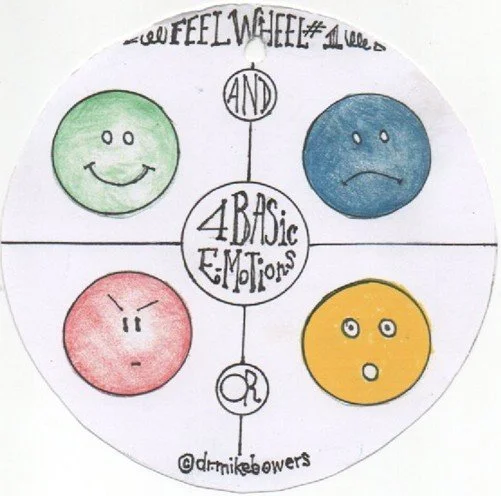
FEEL WHEEL #1
The 4 basic emotions which are hardwired into our nervous system: happiness and sadness plus anger and fear.
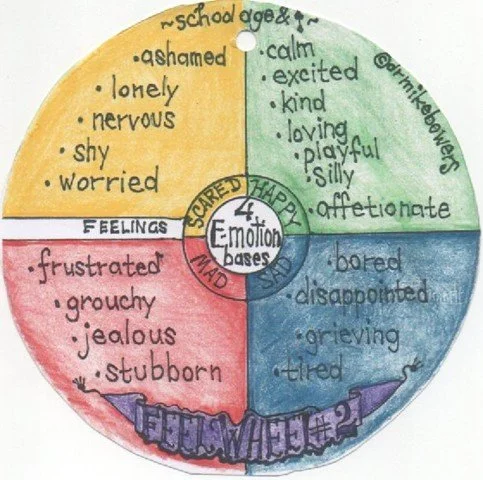
FEEL WHEEL # 2
A FEELING is the interaction of one or more basic emotions and THOUGHTS. Feel Wheel # 2 presents some of the feelings related to each basic emotion.
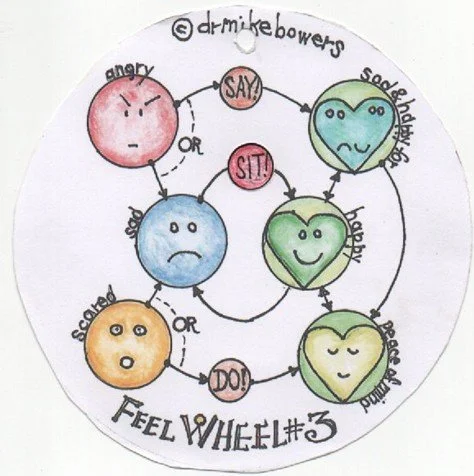
FEEL WHEEL # 3
Each emotion is paired with a word which helps us remember how to manage that emotion with a healthy, constructive response habit. When happy or sad, take time to SIT and reflect. When angry, SAY something. When scared, DO something to feel safe.
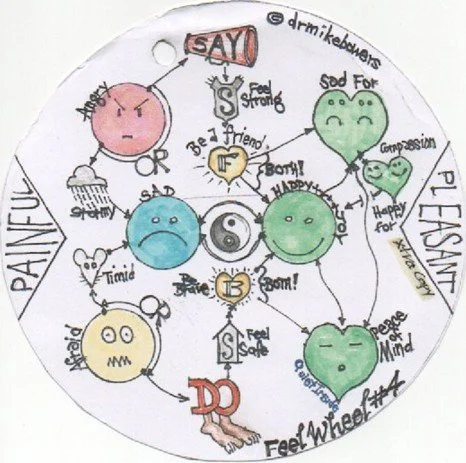
FEEL WHEEL # 4
When experiencing the painful emotions - sadness, anger or fear - we choose to respond in a constructive or destructive - healthy or unhealthy manner. This card outlines the steps for managing anger, fear and sadness - and how constructive management of painful emotions leads to increased happiness, joy, social connection and peace-of-mind.
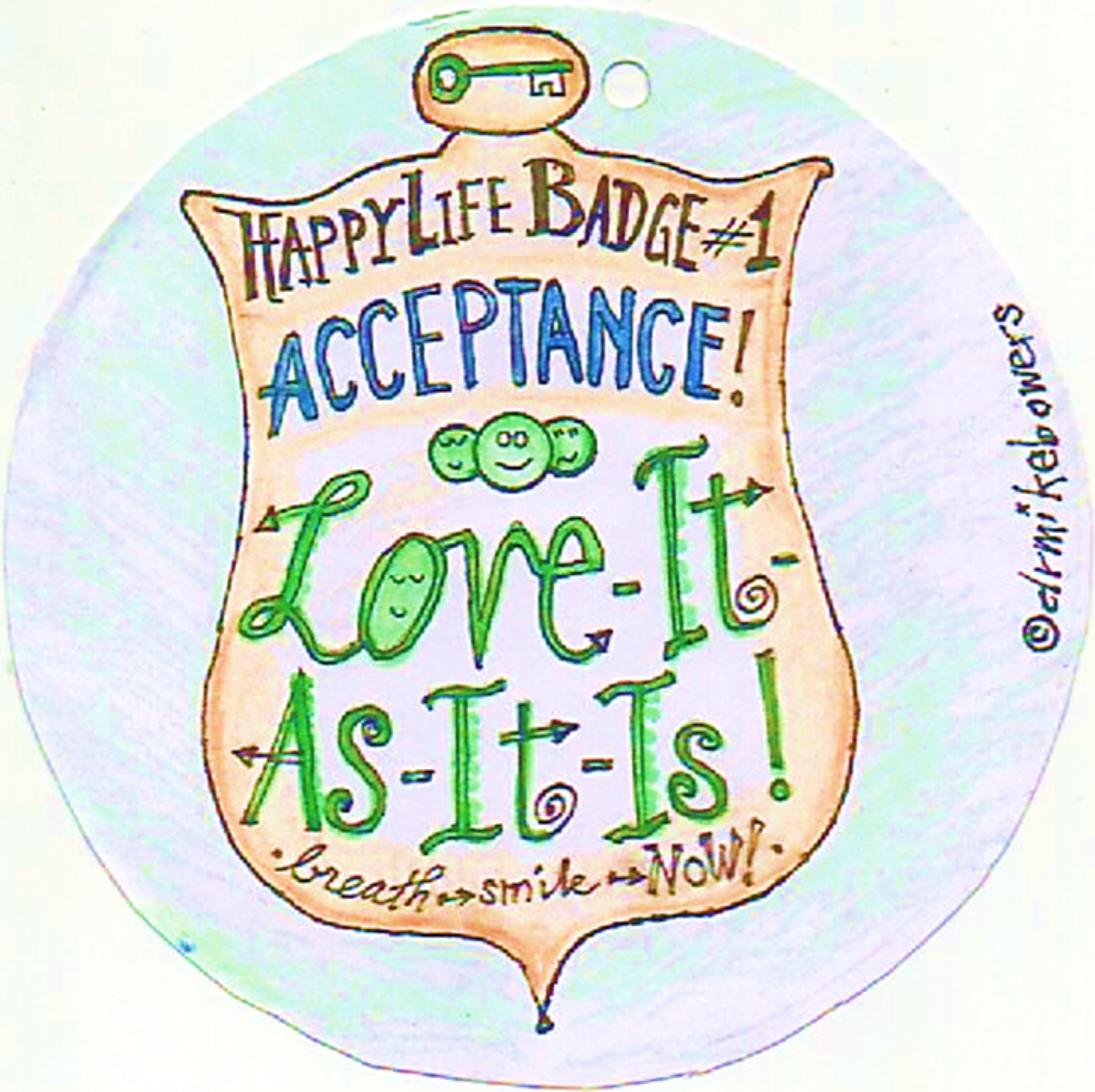
HAPPY LIFE BADGE #1: The single most profound insight for cultivating peace-of-mind is to accept and love life as it is - the wonderful parts, and the painful parts !
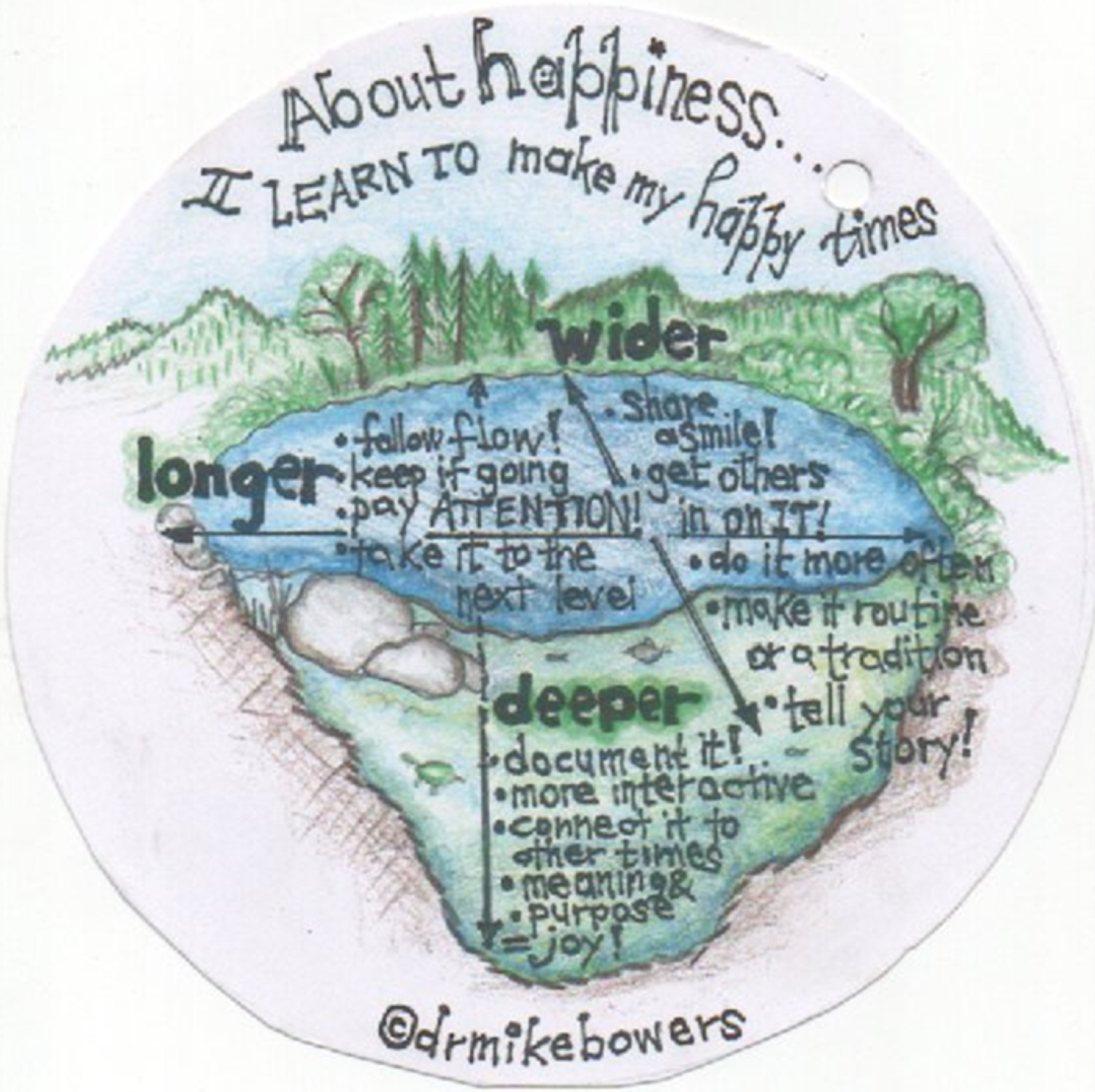
ABOUT HAPPINESS: We seek happiness, but often while experiencing happiness, joy, satisfaction or any other pleasant emotion, we miss the chance to pause, to appreciate and make a practice of maximizing pleasurable experiences.
When we feel the pleasant feelings of joy, happiness, peace-of-mind and compassion, we can learn to make happy times:
LONGER: stay in the pleasant place longer by taking a break from activities to sit still and quiet to simply appreciate and feel gratitude for the gift of happines.
DEEPER: Document the moment with a mental image, a jounal note, or tell a friend. Link this happy moment to other similar happy times in life. Reflect on pleasant emotions which deepen and add meaning to life.
WIDER: Share the moment with other, during or after. Look for ways to get friends, family and others in on the fun.